Restaurant work has been around since the 18th century. And from the beginning, worker health has never been the priority.
The first restaurants weren't designed for the people making the food. They were designed for the people eating it. Workers were there to create an experience, to serve, to perform. Their wellbeing? That wasn't part of the equation.
In 1907, a psychologist went undercover as a server to research the impact of restaurant work on the worker. She worked 13-hour days, seven days a week. She described bruises from carrying trays, arms aching from shoulder to fingertip, feet swollen and blistered. She barely had time to eat. When she did, it was leftovers, standing among dirty dishes.
That was more than 100 years ago.
Here's what's troubling to me: much of what she described still exists today. The long hours. The physical strain. The lack of breaks. The dependence on tips to survive.
The data tells the story. In 2018, food service ranked third overall for workplace injuries. Workers reported musculoskeletal disorders, burns, cuts, slips, and falls. Sexual harassment claims in restaurants are the highest of any industry. Stress, burnout, and substance use are significantly elevated compared to other occupations.
And the structure of the industry makes it worse. Tipped wages keep earnings low and unpredictable. Lack of paid sick leave means people work while injured or ill. High turnover means little investment in training or safety.
We've built an industry on the backs of workers we don't protect.
If we want restaurants to thrive, we need to start with the people who make them run. Better wages. Real benefits. Safe working conditions. Training that prioritizes health, not just speed.
What can this look like in real life?
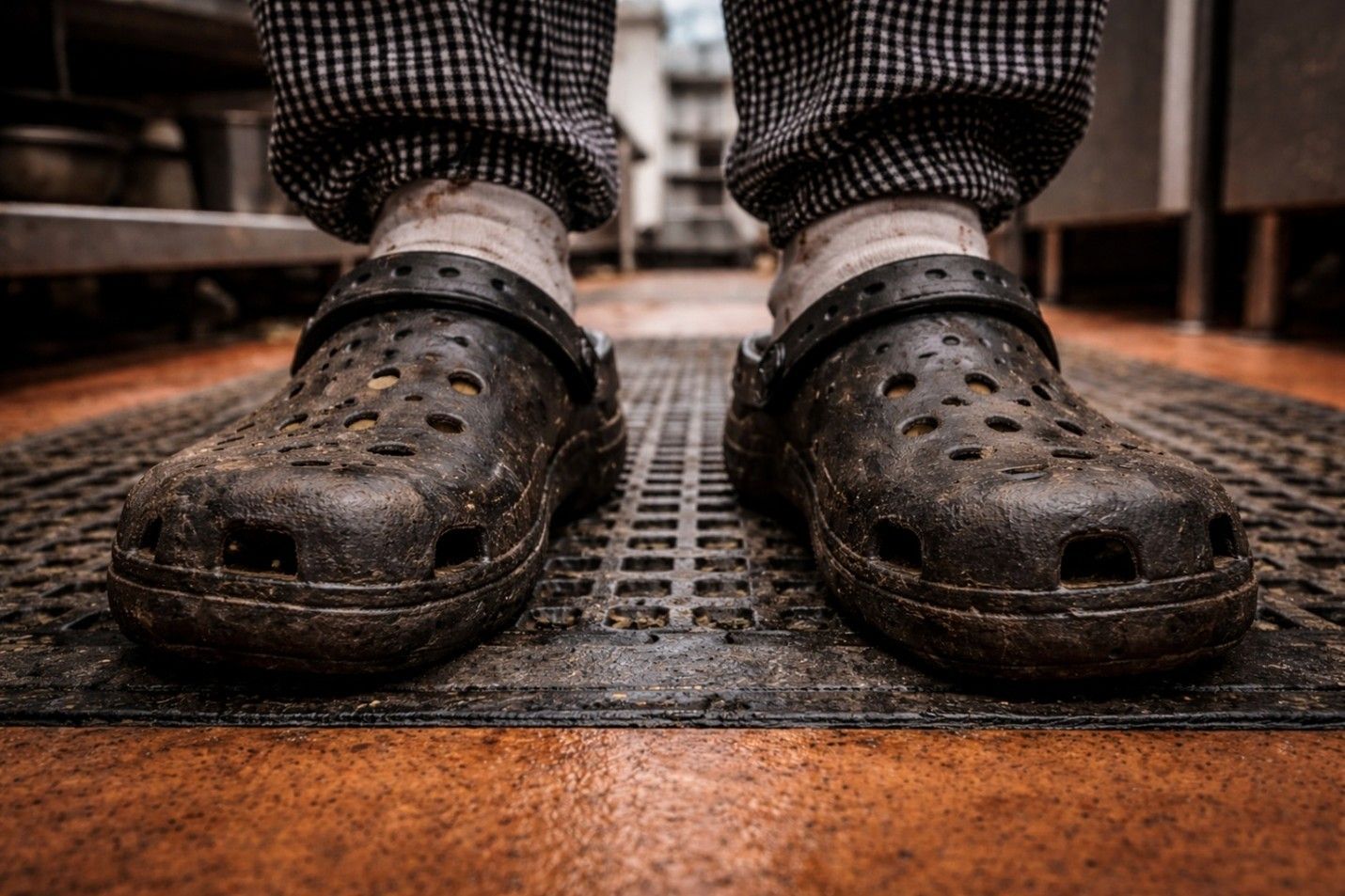
1. Shoes and floors — are your floors hard concrete? Find the best mats possible and make sure everyone knows how to keep them clean. Then, offer vouchers for good work shoes to everyone who works for you. Give them a list to great websites or stores that sell those great shoes.
2. Ask your crew what they believe might help and what they would find value in. Is it a yoga instructor coming in a couple of days a week? Is it a gift card to for a massage? Is it a gym membership? Give them lots of options.
3. Mental Health — there are lots of ways to address this. It could be offering an Employee Assistance Package (EAP). It could be scheduling a training with organizations like CHOW.org that have programs specifically for restaurant workers.
4. Pay people well and on time. Yeah, obvious right? Here's what I mean: no one should have to worry about when their pay will arrive in their bank account. Offer direct deposit and debit card loading. Manage tips through a company that can offer flexible payment options for tips.
5. Encourage restful breaks — make sure your team takes breaks and support each other on breaks.
6. Family meal — this is should be a non-negotiable. An opportunity for everyone to sit down and relate to each other. No eating on the run, while standing at the bussing station.
7. Examine the flow of work closely (AI models can do this well) so that your staff economizes on steps and movement.
8. (This is controversial so — trigger warning) — think about healthy staff before you think of healthy bottom line. If it means closing two days a week, maybe that's what you should do. With healthy staff, you may find the healthy bottom line follows.
This isn't about being soft. It's about being smart. Healthy workers are better workers. Supported teams create better experiences. Safer kitchens run more efficiently. And profits will come.
The question is: are we finally ready to prioritize the people behind the plates? Let's start now. Let me know when you're ready to start and we can map this path together.